A Bit about Banksy History
Banksy was likely born just outside Bristol in the early 1970s. They came of age in a city battered by decades of postwar decline, a place where dereliction wasn't backdrop; it was curriculum.
In 1975, New York was sold to the banks. The austerity and unrest that followed watered the roots of hip-hop culture, which had been born in the South Bronx in 1973. The same year New York's fiscal crisis hit, Bristol's Inland Dock closed for good. By the early 1980s, hip-hop was taking root in Bristol while Thatcher's government collapsed the apprenticeship system, leaving a generation of young people with few prospects.
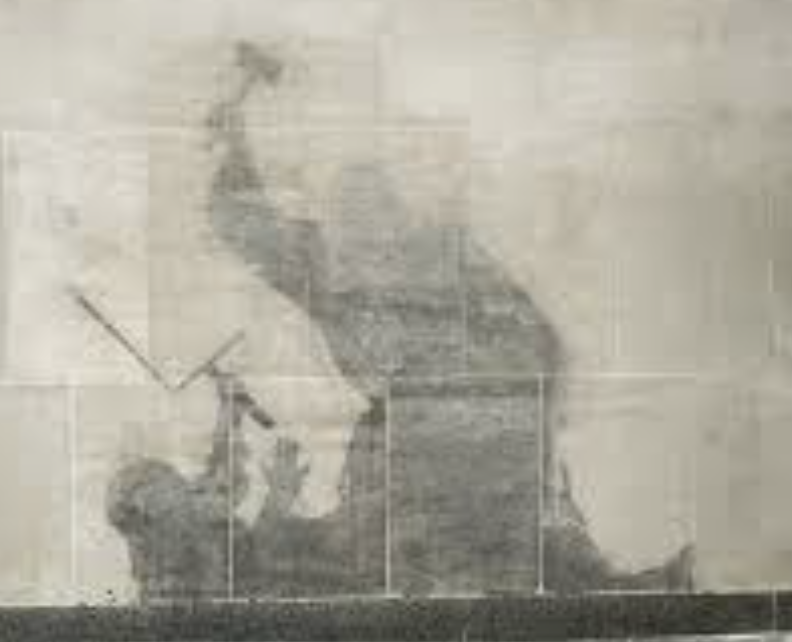
In the companion book to their Cut & Run Glasgow exhibition (2023), Banksy points to the Hartcliffe Riot of July 1992 as the true spark. On July 16, two local men were killed while riding a stolen police motorcycle taken from an officer's driveway. The officer who owned the bike swerved his unmarked car onto the wrong side of the road to "block" them. The head-on collision killed both men instantly. The community's fury over the police's actions sparked three nights of rioting. From that tension came the image of the flower thrower.
This was an idea Banksy would return to in what became one of their most iconic and enduring symbols of resistance. The best-known version, Love Is in the Air (Flower Thrower), would later appear on the West Bank wall: a world away from Hartcliffe but running on exactly the same voltage.
The 1990s Bristol Graffiti scene was bubbling. Under the watchful eye of older heads, Banksy learned the way of the can. Banksy started out as a freehand painter associated with the DryBreadZ orbit. This was the first phase: raw, slow, and exposed. Freehand work meant standing in front of a wall for hours, which meant getting caught, getting chased, and leaving pieces unfinished.
The legend goes that the shift came while they were hiding from the police under a bin lorry, when they noticed the stencilled serial numbers on the underside. The technique clicked. They could cut the image in advance, hold it to the wall, spray, and walk away. It was faster, cleaner, and repeatable.
This technique had a lineage that ran straight back to Paris. Xavier Prou, known as Blek le Rat, had been cutting life-sized stencils on the streets of the French capital since 1981. He had almost single-handedly shifted the grammar of street art from lettering to imagery, using a technique already employed by Bristol's 3D and Nick Walker.
Blek built the language; Banksy learned to shout in it. In those early stencil years, the source material was typically found imagery, including photographs, prints, and existing illustrations. These were cut and reworked into stencils that could be deployed in seconds. One of the sharpest examples of found imagery is The Grim Reaper (2003).
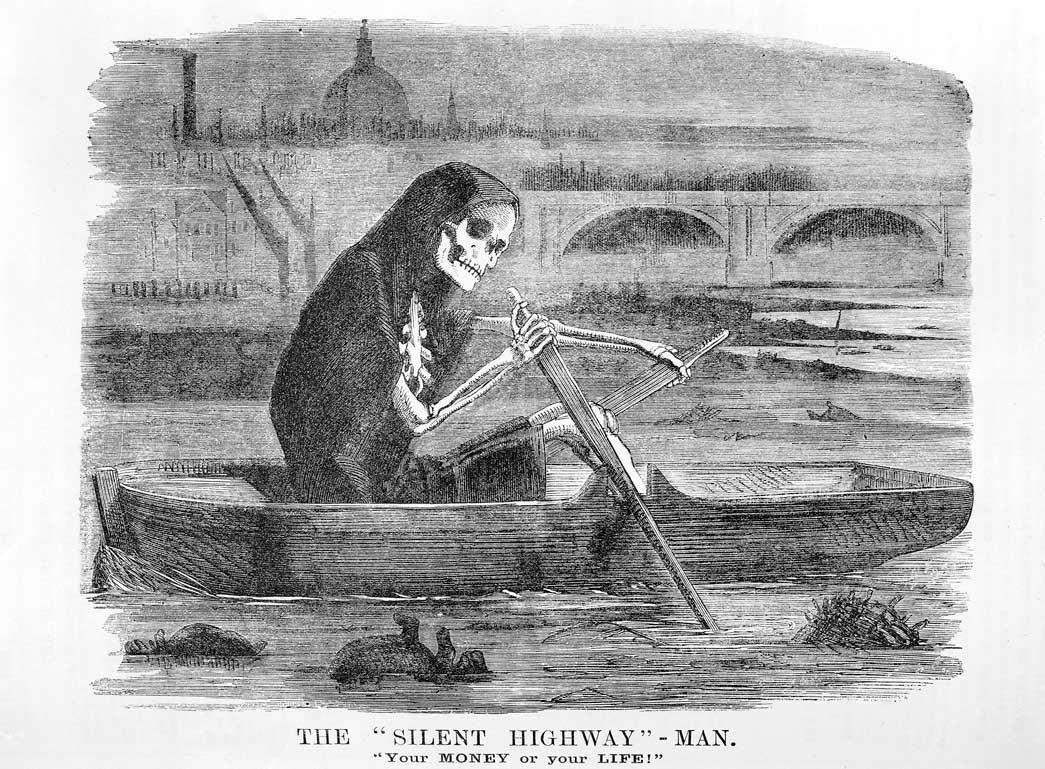
Painted on the waterline of the Thekla, Bristol's floating nightclub. This was the raw era of painting alleyways, hoardings, and the city itself. The culture ran deep enough that by 1999, Banksy ran a spray-painting workshop with kids at Lawrence Weston to share their passion. Bristol gave Banksy the training ground, the audience, and the antagonists.
The Prankster : From Severnshed to the MoMAIn February 2000, Banksy held a pivotal exhibition at the Severnshed restaurant in Bristol. It was one of the key early moments in their shift from local writer to wider phenomenon, arriving around the time of their move to London.
From there, the prankster instinct took over. Inspired by the absurdity of institutional authority and the ease with which elite art spaces could be fooled, Banksy began smuggling their own "masterpieces" into major galleries and museums. They targeted the MoMA, the Tate, and the British Museum. They weaponised wit and dry humour by using flying mannequins with balloons, doctoring signs, and inserting mischief into demonstrations and public spaces. The gallery was no longer a destination. It was a target.
The Printing Press : Pictures on WallsIf the stencils were the language, Pictures on Walls (POW) was the printing press. Founded in the early 2000s, POW became the engine room behind Banksy's reach, along with a small collective of artists. POW manufactured and sold affordable prints, building an audience on the internet and taking advantage of the 2000s web boom.
At a time when the traditional art market still treated street art as vandalism, POW sidestepped the galleries entirely and sold directly to the public. They often sold for modest sums that now look almost absurd against current auction prices. The work didn't need a dealer or a white cube; it needed a website, a mailing list, and an audience that already understood the joke. POW gave the movement commercial legs without selling it out, at least for a time.
Nathan Barley & the West Bank, 2005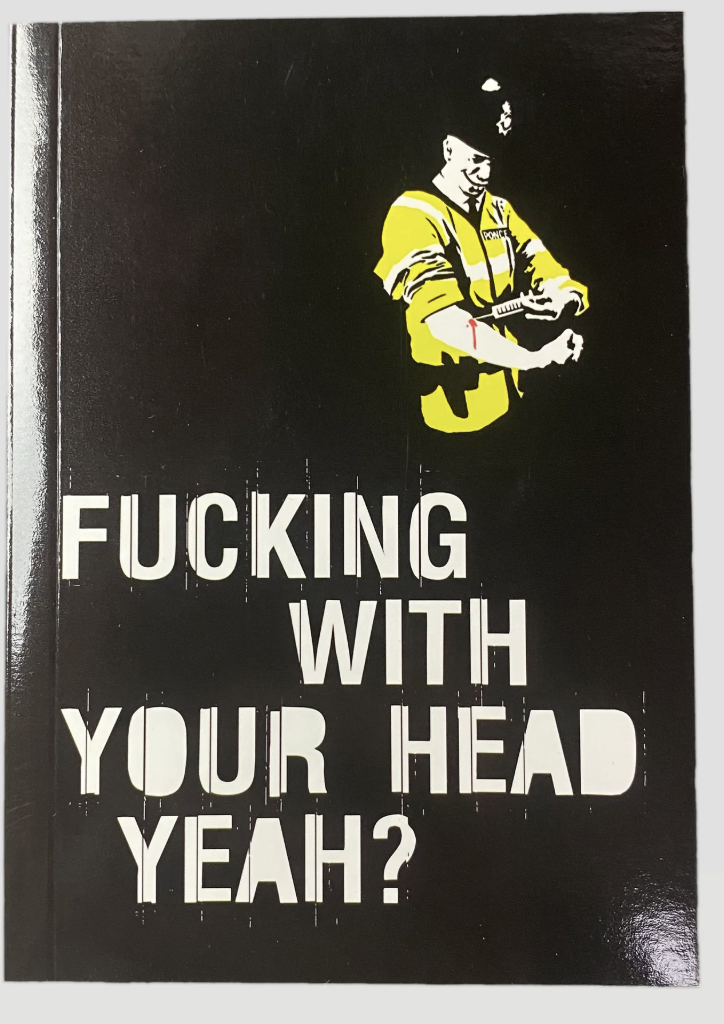
In 2005, the DVD release of the cult comedy Nathan Barley hit the East End scene. According to James Peake's podcast guest Steph Warren, the mockery stung. Chris Morris and Charlie Brooker's satire of Shoreditch self-regard directly lampooned Banksy with a "little black book" full of parodies of the work. This caught Banksy at exactly the moment when that culture was beginning to circle them.
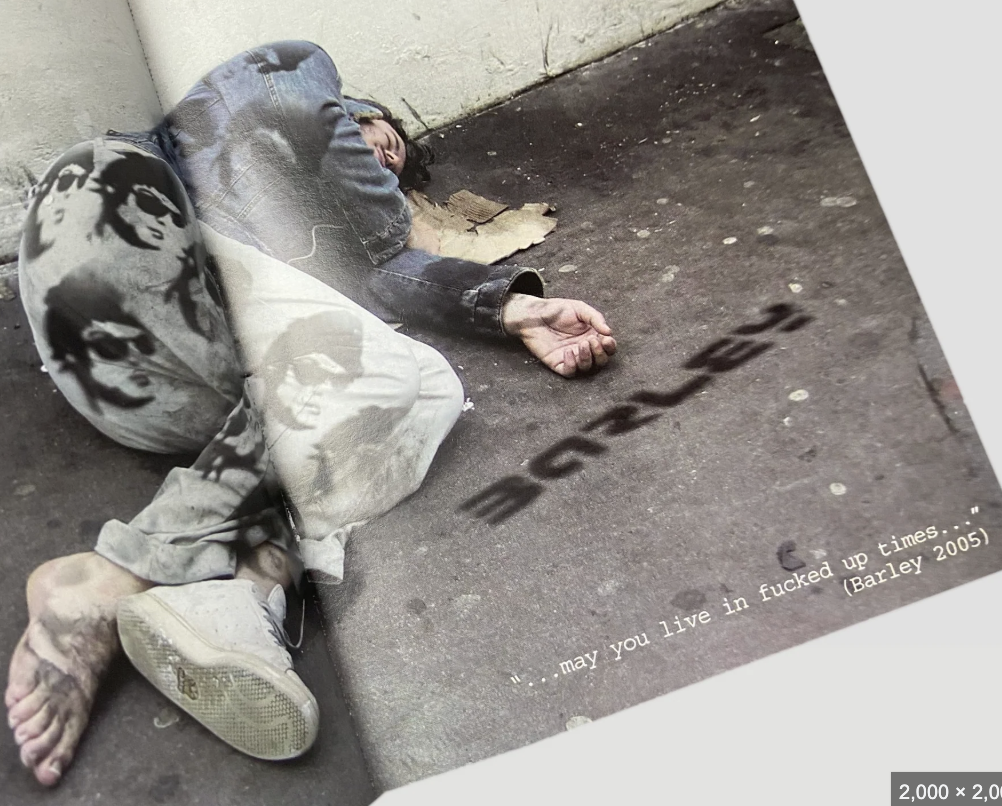
If it stung, it may have also sharpened them. Whatever Nathan Barley reflected back, Banksy's response wasn't retreat. It was escalation. The work that followed wasn't defensive; it was some of the most ambitious and politically charged of their career, as though the sting was exactly what was needed to burn away any lingering comfort.
The West Bank Wall (August 2005): Banksy transformed a symbol of occupation into a global canvas with a series of murals. Cracks and gaps in the reinforced concrete revealed beaches and kids playing as Banksy used their growing global platform to highlight geopolitical issues.
Crude Oils (October 2005)A Notting Hill shop filled with live rats and doctored oil paintings showed a leap in ambition, technical wit, and theatrical control. If anyone thought Banksy was just a stencil merchant, this was the answer.
The Director : Composing Their Own Imagery, 2006Well Hung Lover (2006), painted on Frogmore Street in Bristol, became the work most often described as the first legal piece of street art in the UK after retrospective public backing. The city was finally claiming him.
But it also cements a quiet shift in method. As Keith Allen later revealed on Facebook, the naked man dangling from the window ledge was him. He was hung from a scaffolding pole by Banksy, photographed, and then turned into the stencil. Banksy was now composing their own source material. They were directing scenes, casting real people, and building composite images from scratch. This shift moved them from scavenger to director, changing them from someone who reworked what already existed to the owner of the means of production.
The Elephant in the RoomBarely Legal in Los Angeles (2006) served as their definitive arrival on the global stage. The warehouse show featured a living elephant painted to match the wallpaper, making the metaphor literal and enormous. Then came The Village Pet Store and Charcoal Grill (New York, 2008). This was a shopfront window filled with animatronic chicken nuggets dipping themselves in sauce, hot dogs lounging in their own buns, and fish fingers swimming in a bowl. People laughed, then stopped laughing, then weren't entirely sure what they were feeling.
This wasn't new territory. Animals had been running through Banksy's work from the very beginning. They were carriers of their sharpest ideas rather than mere decoration. The rats came first. Stencilled across walls in the early years, they were the perfect avatar for everything they were interested in. They were unwanted, ungovernable, and invisible to most people. They survived in the margins of a system that would rather pretend they didn't exist. They were the urban underclass rendered as vermin, or vermin recast as the urban underclass, depending on which way you held the frame.
In 2002, the animal instinct found a wider stage. Greenpeace commissioned Banksy to produce a poster for their Save or Delete campaign against global deforestation. They gave them The Jungle Book: Mowgli, Baloo, and the rest were blindfolded and stranded in a landscape of smashed, razed forest. Disney's lawyers killed it.
The campaign was pulled and the posters were recalled, with most of them sent for recycling. The corporation that had made its fortune selling children a fantasy of the natural world shut down a campaign trying to protect the real thing. It was an early warning: the machinery of copyright and trademark law would eventually come for Banksy directly.
By the time of Turf War in 2003, the animal motif had become a full staging ground for the tension between nature and the systems imposed on it. This Dalston warehouse show displayed live animals painted with unlikely coats, such as a pig in police blue or cows in Andy Warhol spots. Animal rights campaigners protested both Turf War and Barely Legal, but the point had already been made. By the time the chicken nuggets were dipping themselves in sauce in New York, the joke had ten years of groundwork beneath it.
Donkey Documents, 2007Donkey Documents: A piece showing an Israeli soldier checking a donkey's papers sparked controversy among the people it was supposed to stand alongside. While Banksy intended it as a mockery of border bureaucracy, many Bethlehem residents felt it compared Palestinians to beasts of burden.
This was a rare moment where the "art tourist" perspective, however well-intentioned, collided with local reality. The wall work remains some of their most powerful. It is also a reminder that painting someone else's struggle is not the same as living it.
Banksy took over twelve rooms of the Bristol Museum & Art Gallery for a summer. It drew over 300,000 visitors and became the most popular exhibition the museum had ever staged. The city's own institution handed its keys to the kid who'd started out painting its walls without permission. This was the return, not as a prodigal son, but as something the city had helped build and now wanted to claim.
The Canal War : King Robbo, 2009While Bristol was handing them the keys, London's old guard was sharpening its knives. In 1985, a fifteen-year-old graffiti writer called Robbo (John Robertson) had painted a full-colour piece titled Robbo Incorporated on a wall beside Regent's Canal in Camden. Over the next two decades, as authorities scrubbed virtually every other Robbo piece from London, this one survived. By the 2000s, it had become the oldest piece of graffiti in London. It was a relic, left untouched out of respect by an entire generation of writers.
In 2009, Banksy painted over most of what remained of it with a stencil of a workman pasting wallpaper. The twenty-four-year-old piece was reduced to decoration being papered over. In the unwritten law of graffiti, going over a more established writer's work is the cardinal offence. Robbo came out of retirement. On Christmas morning 2009, he crossed the canal and reworked the wall so Banksy's workman appeared to be painting the words "KING ROBBO" in silver letters. The tit-for-tat escalated across London as the Camden wall itself changed hands eight times. It was juvenile, relentless, and utterly serious: two philosophies of the wall arguing in paint.
In April 2011, Robbo was found at the foot of a staircase with a fractured skull. He never regained consciousness. In November 2011, with Robbo still in a coma, Banksy returned to the Camden wall one last time. They painted a black-and-white rendering of the original Robbo Incorporated and added a crown with a spray can and a flame above it. It was a candle lit for a king. Team Robbo decended on the site to restore a full colour version.
Robbo died on 31 July 2014 at the age of forty-four. The canal war was about what their rise had done to the culture they'd come out of. It was a world built on freehand skill and internal codes now being reshaped by stencils, global fame, and auction prices. Robbo was just the one who said it loudest on the wall itself.
Exit Through the Gift Shop (2010) turned the camera on the street art world itself. The film was at once a documentary, a prank, and a takedown. That same year, the couch gag for The Simpsons smuggled Banksy's politics into one of the most recognisable intros on earth. It was a bleak, brilliant little act of sabotage beamed straight into prime-time television. Better Out Than In (New York, 2013) was a month-long residency that turned the city into a scavenger hunt, ranging from secret art stalls in Central Park to the Sirens of the Lambs slaughterhouse truck.
The Ownership Question : Who Owns a Gift?As Banksy's work gained massive financial value, a fundamental question emerged: who owns a piece of art left on a public wall? By 2008, the "Banksy Effect" turned street art into a removable asset. Private companies began stripping murals from alleyways to sell to collectors. In response, Banksy established Pest Control, which is the only official body that can authenticate their work.
Slave Labour (2012): This mural of a small boy stitching Union Jack bunting appeared on a Poundland branch. Within months, it was hacked off the wall and shipped to a Miami auction house. The episode exposed a core tension: when street art leaves the street, does it belong to the artist, the building owner, or the community?
Mobile Lovers (2014): This piece appeared on a doorway next to the Broad Plain Boys' Club in Bristol. Dennis Stinchcombe, who had run the club for nearly fifty years, removed it with a crowbar to prevent others from taking it. Banksy wrote Stinchcombe a letter stating the piece was theirs to do whatever they felt was right with. It sold for £403,000 and kept the club open.
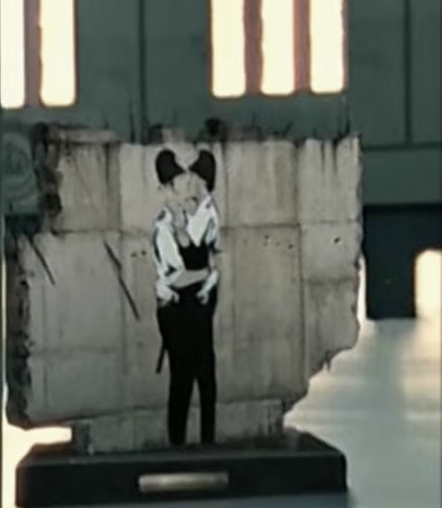
Alfonso Cuarón's Children of Men (2006) had imagined this endgame before the first saw arrived. In the film's "Ark of the Arts," the Kissing Coppers mural is seen cut out and placed on a plinth as a trophy for the wealthy.
 Dismaland & The Walled Off Hotel
In the summer of 2015, Banksy built Dismaland in the derelict Tropicana lido in Weston-super-Mare. This "bemusement park" featured a wrecked Cinderella carriage surrounded by paparazzi figures. The reference to Princess Diana was unmistakable. It showed how happily-ever-after meets the machinery that devours stories. Afterwards, the materials were shipped to Calais to build shelters for refugees.
Two years later, Banksy opened The Walled Off Hotel in Bethlehem. Facing the Israeli separation barrier, it was advertised as having "the worst view in the world." Every room looked out onto the wall. It was the logical extension of their 2005 murals. Where those pieces had offered fantasy, the hotel made you sit in the shadow of reality. It functioned as a political protest, an absurdist joke, and a genuine contribution to the local economy.
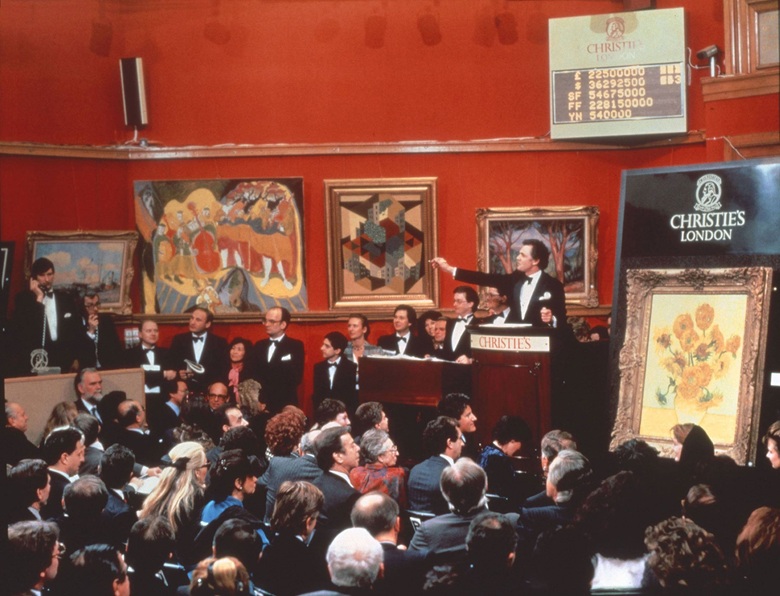
The Shredding : Love Is in the Bin, 2018On October 5, 2018, Girl with Balloon sold at Sotheby's for £1.04 million. As the hammer fell, the painting slid through a hidden shredder built into the frame. The piece was rebranded Love Is in the Bin and eventually sold for £18.6 million.
Within the street art community, the shredding sparked a row. Artist JPS (Jamie Paul Scanlon) questioned the painting's authenticity as a 2006 original. He argued that the lines were too crisp and matched his 2017 or 2018 work instead. His piece Outta Time (2020) showed his own version of the Balloon Girl standing beside a DeLorean. The message was clear: the only way that painting was from 2006 is if someone had a time machine. The controversy highlighted how much power sits inside the closed loop of Pest Control.
The Trap : Gross Domestic Product, 2019The ownership question eventually took a legal turn. A greeting card company filed trademark claims on Banksy's images, arguing that because they couldn't identify themselves, the trademarks were up for grabs.
Banksy's answer was Gross Domestic Product, a shop front in Croydon. Behind the glass sat products like a stab-proof vest and welcome mats stitched from migrant life jackets. Each item was trademarked and for sale, establishing the commercial use of their brand that the law required. It was a legal defence disguised as a conceptual art show.
Today : The Humanitarian & the PranksterBanksy remains both prankster and humanitarian. They help fund the Louise Michel rescue vessel in the Mediterranean, make work in war-torn Ukraine, and back the Colston Four in Bristol.
At Glastonbury 2024, they sent an inflatable raft of dummy migrant children crowd-surfing over the fans. The following summer, a screen-printed version quietly appeared at a festival stall for twenty pounds. It wasn't confirmed by Pest Control, which only added to the mystique.
The London Zoo RunOver nine days in August 2024, a new animal appeared in London each morning. This culminated in a gorilla lifting the shutters of London Zoo to release the animals inside. The Zoo, which had scrubbed a Banksy piece in 2003, now placed the new work behind Perspex and posted security guards.
The series brought the animal thread full circle. These animals were cleaner and more illustrated, marking a shift toward pure drawing. Just when you think you know what they're going to do next, a rhino is mating with an abandoned car. Sometimes the most profound thing about a Banksy is that it was just a bit of fun.